
AI Usage is Becoming More Equitable
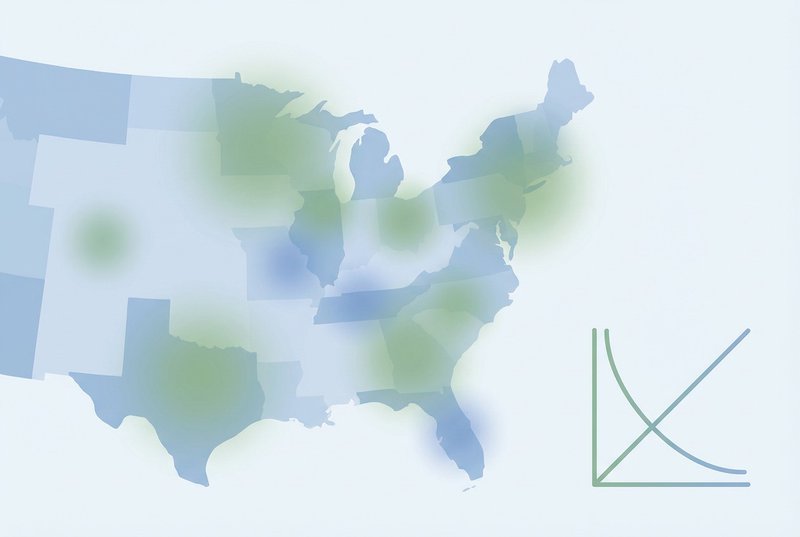
A major finding is the drop in AI concentration among top-performing states. From August 2025 to February 2026, the per-person AI usage share in the top five states fell from 30% to 24%. This suggests AI tools are more accessible nationwide, not just in tech-heavy areas. The Gini coefficient—a measure of inequality—also declined, signaling a more balanced distribution of AI adoption.
This trend shows AI is spreading beyond major tech hubs, allowing smaller states to catch up and contribute fresh innovation and applications—often by shipping Claude-powered applications through the Claude platform or the claude api, supported by comprehensive api guides and other anthropic resources.
AI Usage Patterns Reflect Workforce Trends
The report notes higher AI adoption in states with workforces concentrated in creative and knowledge-based industries. For example, states with more workers in arts, design, and media see higher per-capita use of Claude, while states with more transportation or material-moving jobs see lower use.
This supports the idea that AI tools are valuable in roles needing creativity, problem-solving, and communication—areas where AI serves as a collaborator, not a replacement. In practice, teams use Claude design to accelerate polished visual work, explore a design system, and iterate on product wireframes and one-pagers, while developers lean on Claude code to navigate a codebase, add inline comments, and improve team productivity without breaking a natural creative flow.
Skill-Biased Technological Change is Accelerating
The report highlights the phenomenon of skill-biased technological change, whereby advancements such as AI disproportionately benefit high-skilled workers, while potentially disadvantaging those with lower skill levels. This trend is substantiated by the March 2026 data, which demonstrate that AI-driven productivity enhancements translate into real wage growth for high-skill workers. In contrast, lower-skill workers whose roles are susceptible to automation are at greater risk of wage stagnation or displacement. This dynamic contributes to increased wage polarization and may exacerbate existing income inequality, raising concerns about long-term economic mobility for workers in automatable occupations. Thus, the report underscores the necessity of policy interventions and upskilling initiatives to mitigate these divergent economic outcomes.
For tech enthusiasts, this raises important questions about how to ensure AI's benefitsare broadly distributed. Addressing these challenges requires sustained action from developers, policymakers, and businesses alike. Developers can design AI tools that prioritize accessibility and adaptability for diverse skill levels (whether they’re using a general-purpose language model or a capable vision model), while policymakers should consider implementing educational initiatives and reskilling programs to help workers adapt to technological changes. Businesses can adopt inclusive workplace strategies, such as integrating AI in ways that complement rather than replace existing roles, and investing in training that enables all employees to leverage new technologies—using Learn Anthropic Academy tutorials, new courses available, or a featured course for product managers, design leaders, engineering teams, and other stakeholders.
AI’s Role in the Labor Market
Anthropic’s report examines the broader labor-market impacts of AI. Historical data show that technologies that enable automation often lead to job losses and wage declines in affected roles. The report notes that AI tools like Claude are mostly used as collaborative aids, not full replacements for human workers.
This distinction is crucial. Although concerns about automation are valid, current AI use focuses on augmenting human capabilities. For instance, AI assists writers, designers, and customer service teams in working more efficiently—helping designers in a designer's room prepare a handoff bundle or enabling engineering teams to standardize workflows with a model context protocol for safer integration across tools.
Despite the promising trends, the report also warns of potential pitfalls. For instance, AI errors could significantly undermine productivity gains, especially if businesses rely too heavily on these tools without proper oversight. Moreover, while businesses may view AI as a means to increase efficiency, mistakes made by AI systems—such as misclassifying data or providing incorrect recommendations—could lead to costly disruptions and erode trust in these technologies. Additionally, the uneven adoption of AI across industries and skill levels could exacerbate existing inequalities if not addressed. This risk is particularly acute in sectors or regions lacking access to advanced digital infrastructure or high-skill training opportunities, potentially widening the economic gap between technologically advanced and less-developed areas. Therefore, while AI holds significant promise, it is essential to acknowledge and prepare for these challenges to ensure that the benefits are broadly and equitably distributed.
However, broader AI adoption offers immense opportunities for innovation as more people and businesses integrate these tools into diverse industries. For example, the report highlights a manufacturing company that used AI-powered predictive maintenance to significantly reduce equipment downtime, illustrating how AI integration can drive tangible improvements and foster novel approaches within traditional sectors. As capabilities expand (sometimes introduced via research preview releases or a new anthropic labs product), organizations will also need governance—especially as offerings like Claude Pro, and model variants such as Claude Opus 4.7 or Claude Opus 4.1 4.4.2 (and even references like 4.2 Claude 2 4.2.1) push teams to evaluate performance, cost, and reliability on next-generation compute.
Final Thoughts
Anthropic’s March 2026 Economic Index Report makes one thing clear: AI’s influence on the economy is expanding, redistributing opportunities, and reshaping how we work. The report’s key findings—from equitable AI adoption to its impact on the labor market—underscore both challenges and possibilities. Looking beyond the present moment, these developments carry broader implications for economic inclusivity, the evolution of workplace practices, and the sustainability of technological progress. In light of these shifts, there is a pressing need for proactive policy interventions that can ensure the benefits of AI are widely shared. Policymakers should prioritize initiatives that reduce digital and educational divides, such as investing in reskilling programs, promoting access to advanced technologies in underserved regions, and developing regulatory frameworks that encourage the ethical and transparent deployment of AI. As society navigates this pivotal transition, technology professionals, policymakers, and stakeholders must consider how thoughtful policy design and responsible AI integration can foster not only economic growth but also social equity and long-term workforce resilience—while also shaping careers and new expectations for product managers, designers, and engineering leaders.

Comments
Post a Comment